
Kent County 72-Hour Release Gap
No official KCSO rolling 72-hour release page or three-day toggle was located as of July 24, 2026. The Kent County Inmate Lookup is framed around current custody, and its linked Viewer accepts booking dates. A booking-date range identifies when a person entered a booking episode. It is not a release-date range, so those results cannot be republished or read as a Sheriff-maintained list of departures.
KCCF’s annual reports do track releases and people not released within 72 hours, but only in aggregate. They do not name each person. The 2025 report says 63 percent of stays ended within 47 hours, which explains why a current roster can lose many short-stay bookings during one three-day review. That rapid turnover makes the lack of an official historical feed locally significant.
Important: Build the 72-hour window from verified individual events. Do not treat a booking search or roster absence as a release list.
The KCCF statistical-report archive supplies context on release volume and length of stay.
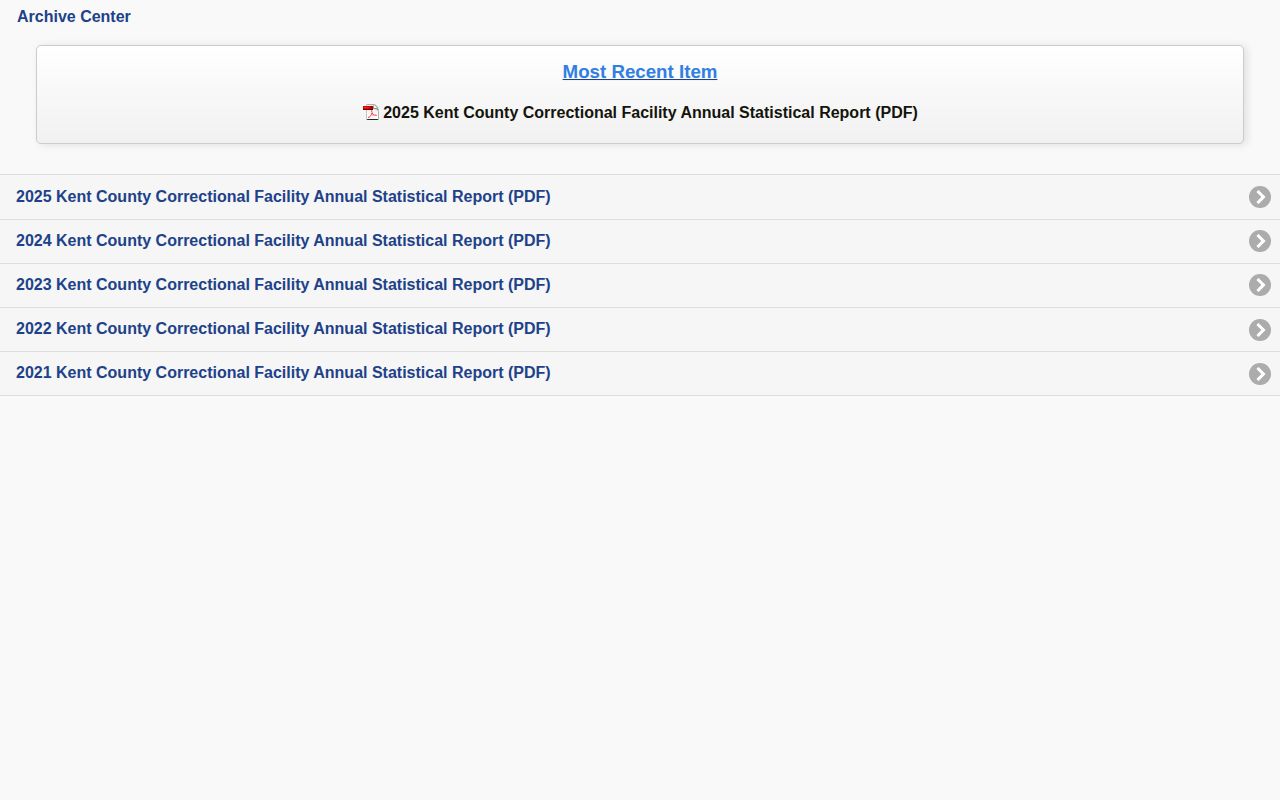
The archive helps explain the pace of release, but a KCSO movement record is still needed for a named person’s date, time, type, and destination.
Check Kent County 72-Hour Releases
Set the exact window first. A calendar span from Friday through Sunday differs from the rolling 72 hours before Monday afternoon. Write down both endpoints and use the same clock when talking with the jail, reading an event notice, and asking for a record.
- Search the Kent Jail Viewer booking form using a full last name, full first name when known, and a narrow booking-date range. Keep the booking and case numbers.
- Read the current custody banner. A listed in-custody status controls over an old or computed sentence field until KCCF resolves the conflict.
- Call 616-632-6300, option 1. Ask whether the named booking ended during the exact 72-hour span and whether it was community release or transfer.
- Check Michigan through VINELink or call MI-VINE at 800-770-7657. Match the person and reporting facility, then preserve the exact status and event date.
- Use the proper Kent County court to find the bond, dismissal, sentence, probation, or commitment order behind the movement.
- Request the KCSO release or movement record when the exact physical departure time, release type, or destination is needed.
The Kent County 24-Hour Release List narrows this process to a same-day clock. A three-day check should not be created by combining three roster screenshots, since each one remains a current-custody snapshot.
Note: Repeat the identity check at every stage because a common name can join unrelated jail, court, or notification records.
Kent County Three-Day Release Fields
There is no official 72-hour feed with a fixed set of columns. Instead, assemble only the fields supported by KCSO, MI-VINE, and the court. The Viewer can provide a booking anchor. Its detail may include descriptive data, a photo, charges, agencies, court and case numbers, bond or fine data, disposition, and an end-of-sentence field when supplied.
| Record field | How to read it |
|---|---|
| Booking number | Identifies one KCCF booking episode and reduces name confusion. |
| Booking date/time | Marks custody intake, not the departure event. |
| Current custody banner | States what the Viewer reports at the moment of the check. |
| Release date/time | Places the physical event within the selected three-day span. |
| Release reason or type | Separates bond, time served, dismissal, court release, and other outcomes. |
| Receiving agency | Shows a transfer to MDOC, another county, or another custodian when recorded. |
| Case and court | Points to the legal order and later case events. |
Do not add an assumed refresh time or retention term. Kent County does not publish a guaranteed Viewer update interval or promise how long released bookings remain visible. If an older detail disappears, the correct fallback is KCSO Records or the court, not an estimate that the record expired after three days.
Kent County Weekend Release Review
A three-day window is useful when offices are closed or a family loses track of a booking over a weekend. KCCF’s Processing Office operates continuously, and the county says bail payment can be handled around the clock. That does not create a fixed release schedule. No official daily release time, guaranteed exit, public waiting area, or holiday release cadence was found.
Separate the court’s act from the jail’s act. A judge may authorize bond before the end of the workday, while payment, holds, record checks, and physical processing continue later. A release could therefore fall on a different calendar date from the order. The same principle applies to a dismissal, time-served sentence, or transfer order. Ask KCCF for the departure time rather than assigning the court timestamp to the jail door.
The window also helps when multiple Kent courts are involved. Felony matters begin in a district court and move to 17th Circuit after the preliminary stage, while misdemeanor matters stay in the proper district court. A booking may carry more than one case number. Search by geography and case stage, and do not assume every Grand Rapids-area arrest belongs to one docket.
For each day, record what the source actually establishes. A Friday bond order, Saturday MI-VINE event, and Monday release screen may describe one continuous process, not three competing answers. The release screen’s physical time should be kept separate from the order date. If the agency record is not yet available, describe the status as pending confirmation rather than filling the gap with the nearest timestamp.
Note: Holiday office closures can slow record access, but the research did not establish that Kent County delays lawful release to the next business day.
Kent County Release Court Routing
A court file explains why custody could end. It may show a bond event, dismissal, jail sentence, time-served credit, probation, or commitment to MDOC. It does not replace the KCSO movement record. “Closed” also does not prove that all supervision or other obligations ended.
Start with the Kent County courts directory when the case number does not reveal the right clerk. Kent has the 61st, 62-A, 62-B, and 63rd District Courts plus municipal divisions of the 59th District. Felony cases move to 17th Circuit after the district preliminary stage. The statewide Michigan court search covers participating courts, but a no-hit can reflect spelling, scope, case stage, or a restricted record.
The county court directory offers the local routing needed to connect a KCCF booking to the proper case.
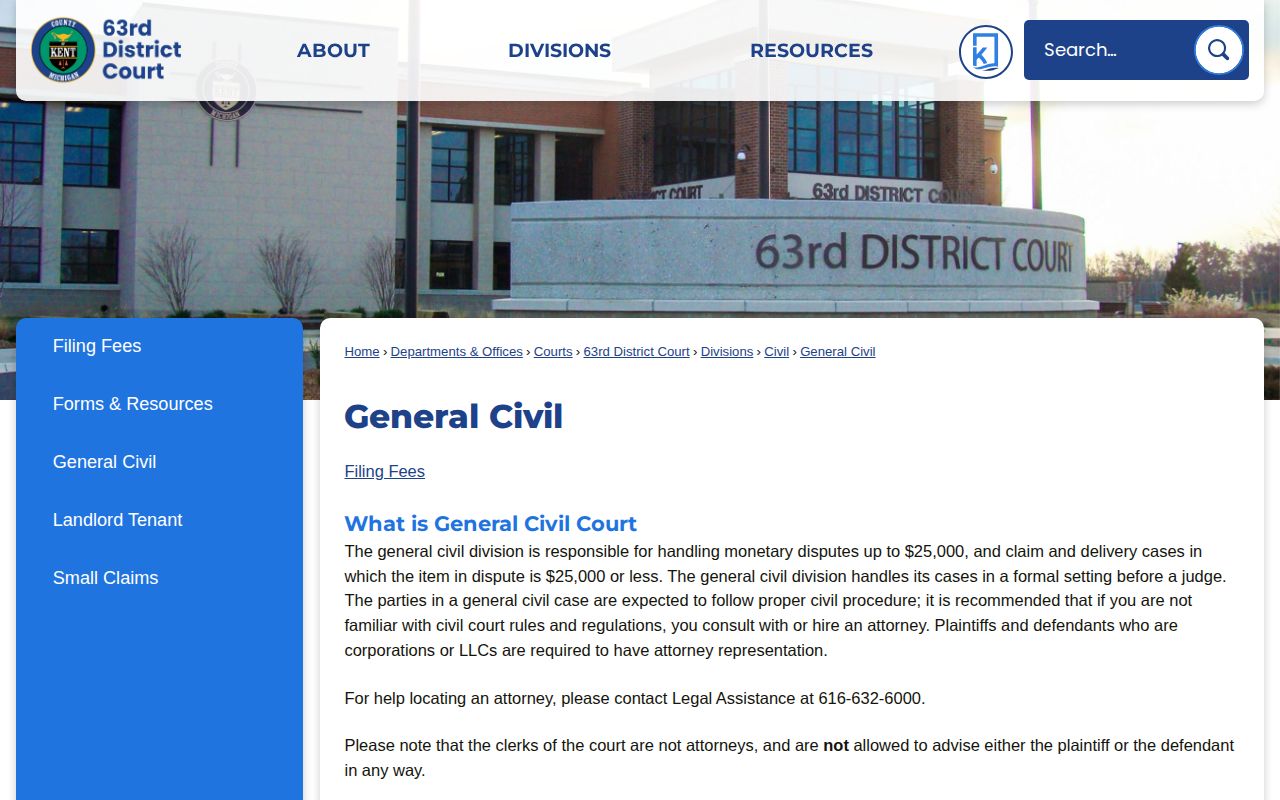
Once the right court is known, read the register of actions and the actual order. Do not infer physical release from a one-line docket label.
Note: A court order explains release authority, while the KCSO movement record supplies the jail’s physical departure event.
Kent County Release Custody Paths
A person who leaves KCCF can go to the community, MDOC, another county, or another agency. “Released from KCCF” should not be shortened to “free” unless the sources support community release. KCSO records the county movement. OTIS records state correctional status. BOP and ICE each answer only for their own federal systems.
- Bonded
- The person left jail under court authority while the criminal case continued.
- Time served
- The court credited the required jail time, subject to any other hold or sentence.
- Sent to prison
- The person left county custody for MDOC custody and was not released to the community.
- Other agency
- Another custodian received the person; ask KCSO to identify that agency.
- Paroled
- The person left state prison but remains under MDOC supervision.
- Discharged
- MDOC supervision for the sentence ended.
If the roster is blank and the court shows a commitment to MDOC, search OTIS rather than marking the booking as a community release. If MI-VINE reports release but the case remains open, that can be a normal pretrial bond pattern. Preserve both facts without calling the person discharged.
A federal or immigration transfer requires its own follow-up. The BOP locator covers many federally sentenced people, while ICE ODLS covers qualifying immigration detainees within its published limits. A no-hit in either tool cannot convert a KCCF disappearance into community release. First obtain the county movement destination, then ask the receiving custodian about the later event.
Obtain Kent County Release Records
KCSO Records is the documentary fallback when no 72-hour feed exists. The county FOIA page accepts requests online, by mail, fax, or hand delivery. State the person, booking number, department, and exact three-day period. Ask for the release or disposition screen and movement record showing date, time, type, and destination.
Kent says it will respond within five business days or may issue a ten-business-day extension. The response can grant, partially grant, deny, seek clarification, estimate fees, or extend the response period. KCSO Records is at 701 Ball Avenue NE, Grand Rapids. The records phone is 616-632-6200 and fax is 616-632-6217. General hours are weekdays from 9 a.m. to 5 p.m., with Wednesday noon to 12:30 p.m. listed as appointment only.
Request electronic delivery, an itemized estimate, and redaction of exempt parts instead of withholding separable public material. Use the court clerk for judgments and bond orders. Use MDOC FOIA for state sentence-computation or discharge records. For a named-person search that extends beyond three days, follow the Kent County released-inmate record path.
Michigan FOIA permits labor, copying, postage, and shipping charges under MCL 15.234. Kent may seek a deposit of up to half when an estimate exceeds $50. A fee estimate does not prove that a requested record will be released in full, since exempt material may still be redacted. Define the booking episode and requested fields tightly so the agency can identify the public record rather than answer a broad status question.