
Kent County Release Status
A release from the Kent County Correctional Facility means that one KCCF custody episode ended. It does not always mean unrestricted return to the community. The Kent County Sheriff’s Office may record bond, time served, charges dismissed, release at court, a lifted detainer, transfer to prison, or release to another agency. Those events lead to different records and different next steps. “Sent to prison” means the person left KCCF for Michigan Department of Corrections custody. “Other agency” can mean another jail or a federal custodian. The precise release type and destination matter more than a bare absence from the roster.
KCSO documents the physical booking and movement. The trial court supplies the legal authority, such as a bond order, dismissal, county sentence, probation order, or commitment to MDOC. OTIS then records eligible state prisoners, parolees, probationers, and recent discharges within its publication rules. MI-VINE can report a release or transfer event, but it is a notification service rather than the certified record custodian. Kent County released inmate records are strongest when these sources agree on identity and sequence.
A missing Jail Viewer result does not prove community release. It may reflect transfer, delay, correction, or limits in the current-custody display.
Kent County Release Types
KCCF’s own reporting gives local meaning to common release terms. A person released on bond still has an open case and may have Court Services conditions. Time served means the court credited the jail term as complete. Release at court reflects a court-directed departure, while dismissal concerns the charge or case disposition. Transfer language must be read literally. Departure for MDOC, ICE, the U.S. Marshals Service, or another county ends KCCF custody without ending all custody.
| Recorded event | What it means | Where to check next |
|---|---|---|
| Bond or pretrial release | Community departure while the case continues | MI-VINE, court register, and KCSO release screen |
| Time served or sentence complete | County jail term ended | KCSO record and sentencing court |
| Dismissed or released at court | Court action authorized departure | District or 17th Circuit Court case |
| Sent to prison | Transfer from Kent custody to MDOC | OTIS and the judgment of sentence |
| Another agency or detainer | A different custodian may now hold the person | KCSO movement record, BOP, ICE, USMS, or another jail |
- Time served
- A sentence treated as complete through time already spent in custody.
- Detainer
- A request or legal hold from another authority that may control the next destination.
- Parole
- Conditional release from state prison while MDOC supervision continues.
- Discharge
- The end of the sentence or supervision reflected in the responsible correctional record.
Kent County Release Record Fields
The useful county record ties one person to one booking episode. Request the booking sheet and the release, disposition, or jail-movement screen rather than asking KCSO to answer a broad question. A name alone can match the wrong person. The booking number, booking date, date of birth when lawfully available, arresting agency, and case number help separate records. The exact date and time of release should remain distinct from the date a judge signed an order or the date another agency received the person.
| Field | What it shows |
|---|---|
| Identity and booking number | The person and specific jail episode |
| Booking date and time | When KCCF recorded intake |
| Arresting agency and charges | The source event and alleged offenses, not a final disposition |
| Court and case number | The docket that explains bond, sentence, or dismissal |
| Bond information | Type, amount, and the release mechanism when recorded |
| Release date and time | The physical departure recorded by KCSO |
| Release type and destination | Community release, court release, prison, or another receiving agency |
| Booking photograph | An image linked to that booking, not proof of guilt or present custody |
The court case adds the legal result. Its register of actions can show pleas, dismissal, sentencing, probation, warrants, bond events, and later amendments. An MDOC profile adds state sentence dates, parole or discharge data, and the supervising office when the person entered MDOC jurisdiction. No one screen is a universal Kent County release record.
Request Kent County Release Records
The Kent County FOIA process accepts requests online, by mail, fax, or hand delivery. KCSO Information Services and Records is at 701 Ball Avenue NE, Grand Rapids, Michigan 49503. The Records line is 616-632-6200, and the fax is 616-632-6217. General office hours are weekdays from 9 a.m. to 5 p.m.; the published Wednesday noon to 12:30 p.m. period is appointment-only. These details were checked July 24, 2026.
- Identify the person, approximate booking dates, arresting agency, and booking or case number if known.
- Ask for the booking sheet plus the release, disposition, or movement screen showing date, time, type, and destination.
- Ask for electronic delivery and redaction of exempt material instead of withholding separable public material.
- Request an itemized estimate before costs pass a limit you choose. Ask for the booking photo separately if needed.
- Compare the response with the court docket and, for a state transfer, the matching OTIS profile.
Kent generally responds within five business days or issues a ten-business-day extension under its published process. A response may grant, deny, partially grant, clarify, estimate fees, or extend the response time. If an estimate exceeds $50, the county may seek a deposit of up to half. Labor, copying, postage, and shipping can be charged under Michigan’s Freedom of Information Act. A qualifying indigent requester may receive the statutory first-$20 waiver subject to its conditions.
The KCSO service-fee page separately lists an inmate photograph at $5 if available for release. That price does not promise that an image exists or override an exemption. MDOC discharge or sentence-computation records follow the MDOC public-record request route, not the county request. Court judgments and certified court papers come from the proper clerk.
Kent Release Records After Set-Aside
Michigan set-aside law can restrict the ordinary public display of a qualifying conviction. It does not authorize a search workaround. If a court record is sealed or set aside, an authorized person should use the court’s lawful access process. The absence of a result can also stem from spelling, court coverage, retention, or database rules. It cannot prove that no historical booking occurred.
Kent’s current Jail Viewer pages do not publish a firm retention term for released booking details. OTIS has its own scope and says discharged records remain in public display for a limited period after supervision ends. For an older county event, the KCSO release record and court file are the sound fallback. For an older state event, use MDOC FOIA and the judgment.
Kent County Bond Release Process
Kent offers unusually clear bond-payment mechanics. The KCCF bonding page says processing is available around the clock at the Processing Office window beside the visitor entrance or at the lobby kiosk. Online and phone payment through TouchPay are also listed. The rules allow specified forms of cash, card, cashier’s check, and money order, while personal checks and split payments are not accepted. Card charges may carry stated fees of 8 to 20 percent, so the live bonding page should be checked before payment.
Payment is not the same as physical release. Staff must match the bond to the person and case, confirm that no other hold controls, and complete processing. A court case may remain open, and Court Services may supervise a defendant after release. The court order, KCSO departure record, and any local supervision terms should be read as separate events.
Note: Never infer that a person is free of all holds merely because one Kent County bond was paid.
Kent County Release Turnover
KCCF’s 2025 annual statistical report recorded 17,234 releases. About 87 percent went directly to the community, while about 13 percent went to prison or another agency. Bond made up 57 percent of recorded release reasons, and time served made up 13 percent. Nearly 47 percent of stays ended within 23 hours, and 63 percent ended within 47 hours. These figures explain why a current roster is a weak historical tool.
Aggregate counts never establish one person’s status. A fast average or common bond outcome cannot replace the booking-specific release code. The report’s “sent to prison” and “another agency” groups are vital because each is a custodial transfer rather than community freedom.
Find Kent County Released Inmates
Begin with a full legal name, date of birth or age, booking date range, arresting agency, and any booking, case, or MDOC number. Then follow the custody path. Search the Kent Jail Viewer booking form with a complete last name; first name and booking dates can narrow the result. If the record says the person is currently held, do not treat an end-of-sentence field or old order as proof of departure.
- Check the Viewer for the current KCCF snapshot and save the booking and case identifiers.
- Call 616-632-6300, option 1, if the person no longer appears or fields conflict.
- Check Michigan in VINELink or call 800-770-7657 for a reported release or transfer event.
- Read the correct district or 17th Circuit Court case for the bond, dismissal, probation, or sentence order.
- Use OTIS when a judgment sent the person into MDOC custody. Use BOP or ICE only for the matching federal custodian.
- Request the KCSO movement record when the exact departure time, type, or destination is still unclear.
The official Kent inmate-lookup page describes its focus as people currently held and warns that data may change or be incomplete. Booking-date inputs do not create a release-date feed. Kent did not publish a distinct rolling 24-hour or 72-hour list when the source sweep was checked on July 24, 2026.
The official interface can be seen in the Kent booking search.
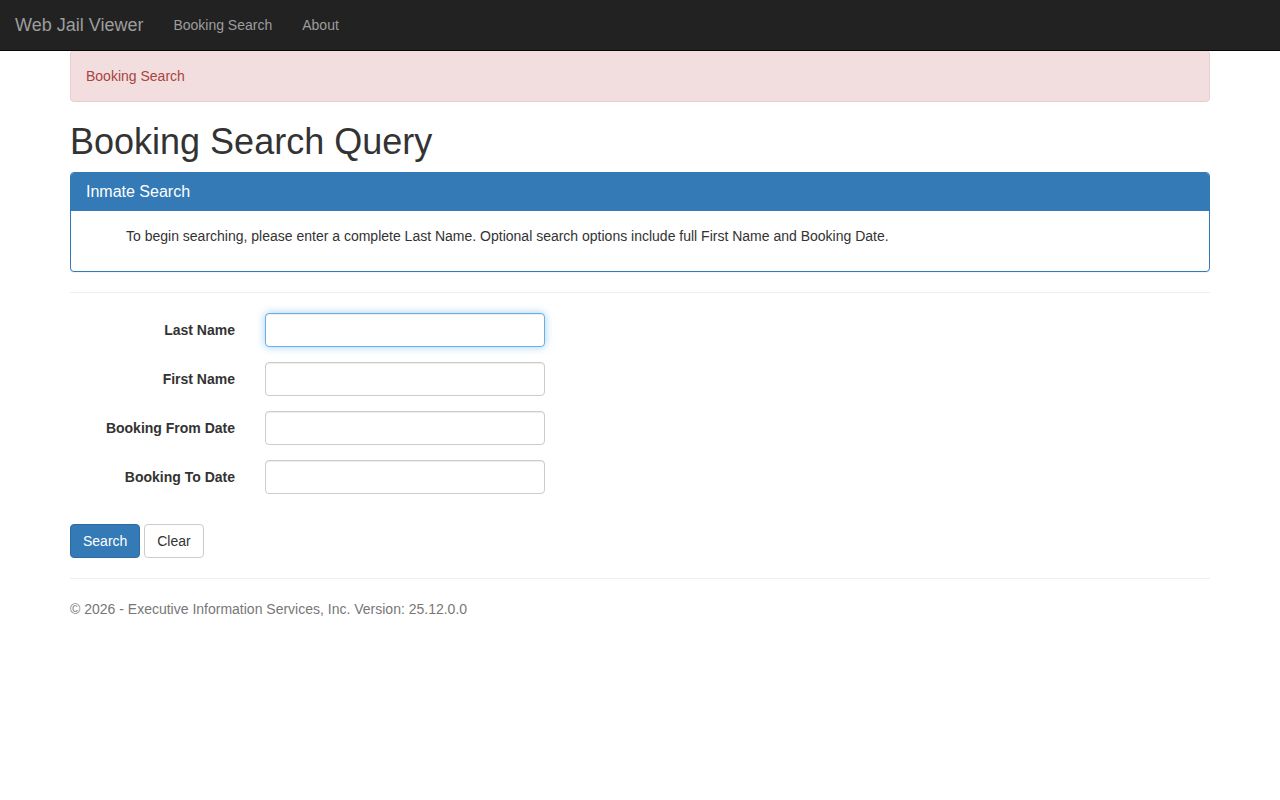
The fields support identity and booking-date research, but they do not label a sheriff-maintained recent-release window.
Kent Released Inmates in OTIS
The Michigan Offender Tracking Information System is the main public state route after a Kent County defendant enters MDOC jurisdiction. Search by the six-digit MDOC number when known. Otherwise use name fields and confirm identity through aliases, age or birth information, offense, sentencing county, and status. OTIS is not a county booking archive. Someone who posted bond or served only a local jail term may never appear there.
| OTIS field | How to read it |
|---|---|
| MDOC number | Unique state correctional identifier |
| Status and location | Prison, parole, probation, discharge, or other published state status |
| Earliest Release Date | Eligibility or calculation field, not a guaranteed departure date |
| Date Paroled | Recorded start of parole outside secure prison custody |
| Maximum Discharge Date | Potential calculated end under the published sentence framework |
| Supervising office | Field office to contact for active parole or probation |
“Parole” means the person is outside prison but remains under MDOC legal supervision. “DISCHRG” means the relevant MDOC sentence or supervision ended. An absconder notation is not a successful release. When an Earliest Release Date has passed but the current status still says prisoner, the current status controls until MDOC resolves the conflict.
The statewide search layout is shown on the official OTIS portal.
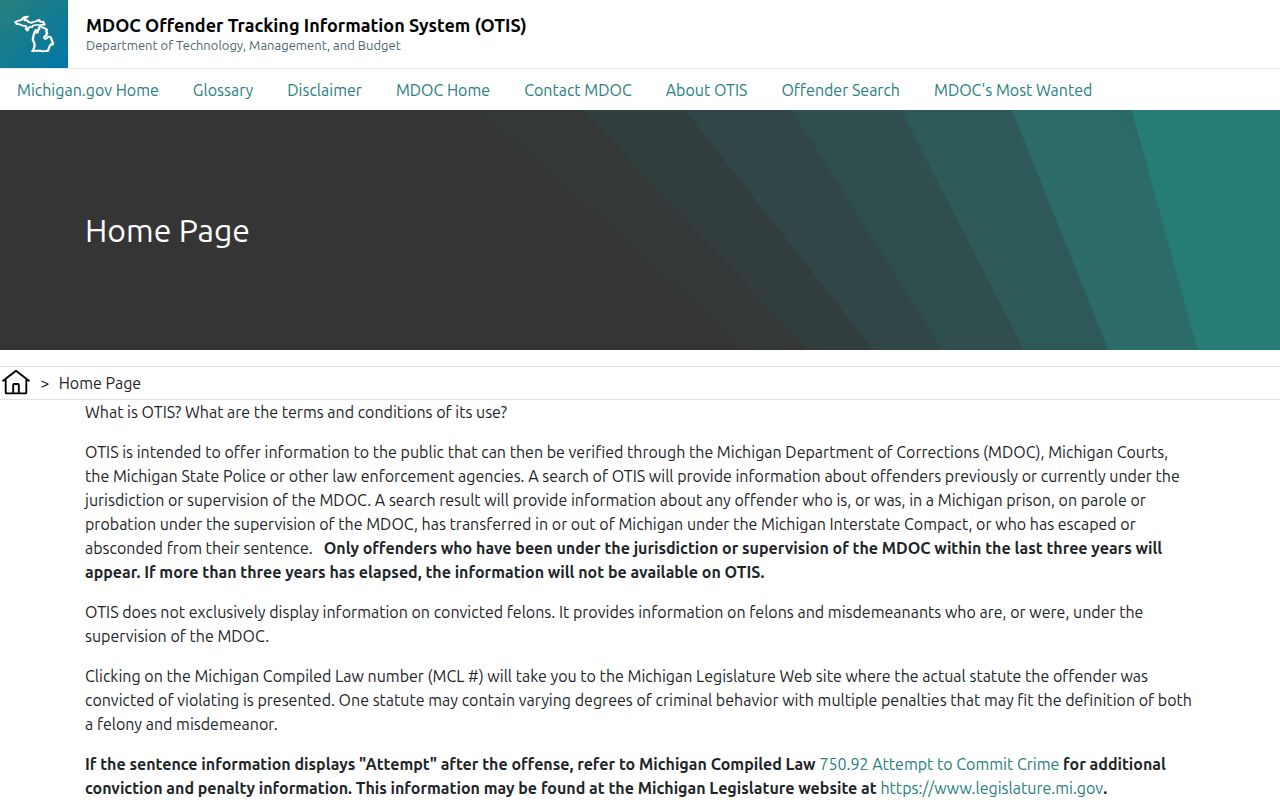
OTIS fields should be copied exactly, with eligibility, parole, and discharge treated as different events.
Kent County Release Court Search
Kent has several district courts as well as the 17th Circuit Court. Municipal divisions of the 59th District and the 61st, 62-A, 62-B, and 63rd District Courts handle matters based on place and case type. Felony cases move from the district preliminary stage to 17th Circuit. One booking can therefore point to both a district case and a circuit case. Search by the court, geography, and stage instead of assuming that every Grand Rapids-area arrest belongs to one docket.
The 17th Circuit name search and the Michigan court case portal may show the legal events that explain departure. A bond order supports authority to leave but not the exact jail-door time. A judgment committing a person to MDOC supports transfer, not community release. “Closed” can coexist with unpaid obligations or supervision, so read the register of actions and judgment rather than the case label alone.
Kent Release Re-entry Programs
Kent Community Corrections links jail-based planning with community services after release. Its program handbook names Arbor Circle case management, Valued Community Member, and New Beginnings among the local routes. Participation and legal status must remain separate. Leaving a KCCF facility or program setting can still lead to probation, pretrial supervision, or another community sanction rather than full discharge.
The Kent Community Corrections office and Court Services operate from 180 Ottawa Avenue NW, Suite 2100, Grand Rapids, with a published phone of 616-632-5350. MDOC parole and probation are different state systems. OTIS and the assigned field office determine whether the person is under MDOC supervision.
Kent Release Alerts and Transfers
MI-VINE provides free custody-event notices online and by phone at 800-770-7657. A registrant can receive notice of a reported release, transfer, or escape for participating Kent custody data. The event label should be copied as shown. A “released” or “out of custody” report describes departure from the reporting custodian; it does not rule out another hold, parole, probation, or a new receiving agency.
Federal systems divide responsibility. The BOP Inmate Locator can show “Released” and a date for many federally sentenced people. “Not in BOP custody” does not rule out supervised release, state custody, or immigration custody. The ICE detainee locator uses an A-number and country of birth or exact identity fields, and its public scope has limits. The U.S. Marshals Service and federal docket answer pretrial and movement questions that BOP may not.
Note: Leaving KCCF for ICE, USMS, MDOC, or another jail is a transfer until the receiving custodian confirms a later release.
Kent Release Records by Custodian
Choose the source that owns the event. This prevents a roster absence from becoming an unsupported conclusion.
| Question | Best starting source | Key limit |
|---|---|---|
| Still at KCCF? | Kent Jail Viewer and inmate phone line | Current-custody focus, not a release archive |
| How and when did KCCF custody end? | KCSO release or movement record | Does not prove later release by a receiving agency |
| What court order authorized the event? | District or 17th Circuit case | May not show exact physical departure time |
| State prison, parole, or discharge? | OTIS and MDOC | Does not cover jail-only cases |
| Federal prison release? | BOP locator and federal docket | Does not clear other custody or supervision |
| Immigration custody? | ICE ODLS and the responsible ERO office | A no-hit is not proof of release |
Kent County Release Systems
The Kent County Correctional Facility is the central adult county jail. The Juvenile Detention Center follows Family Division rules and cannot be searched through adult tools. The Community Re-entry Center concerns correctional and re-entry programming, where movement does not always equal final discharge. No active MDOC prison is listed inside Kent County, so a state prisoner may be housed anywhere in Michigan. Kent’s parole and probation offices supervise people in the community rather than hold them.
Federal, immigration, and municipal custody also require separate routes. No BOP prison or ICE detention center was verified in Kent County, and brief municipal holding may lead to KCCF or a court-authorized release without a lasting city roster. Each facility or system page in the sidebar preserves those boundaries.